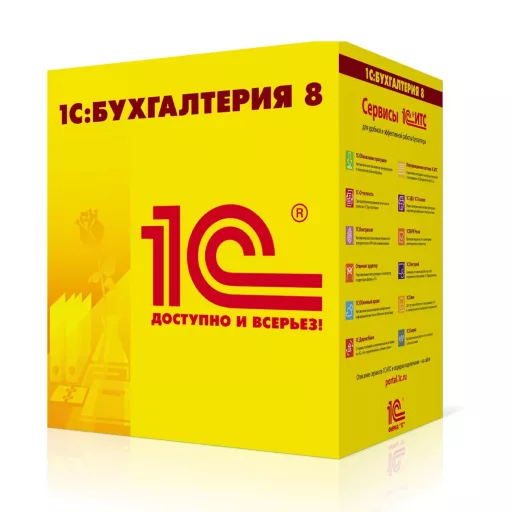
1C in Saint Petersburg — Complete Guide to Russian Accounting Software for Local Businesses
If your company operates in Saint Petersburg and you need reliable, locally compliant accounting and ERP software, 1C is the leading choice across Russia. This guide explains what 1C is, why it fits businesses in Saint Petersburg, how to implement it, and how to choose a certified local partner.
What is 1C?
1C (1C:Enterprise) is a modular platform widely used in Russia and CIS countries for:
— Accounting and tax reporting
— Payroll and HR
— Inventory and warehouse management
— Retail point-of-sale (POS) and online cash registers (ККТ)
— CRM, production, and business intelligence
Its strengths are deep localization for Russian regulations, flexible customization, and a large ecosystem of certified partners and industry-specific configurations.
Why choose 1C for Saint Petersburg businesses
— Local compliance: built-in reporting formats for Russian tax authorities and integration with local fiscalization systems (online cash registers and fiscal data operators).
— Language and documentation: Russian-language interfaces, manuals, and local support.
— Integration: bank statement import, e-invoicing (where applicable), and integration with popular Russian online services.
— Scalability: suitable for small firms through to large enterprises with multiple subsidiaries and warehouses.
— Cost-efficiency: modular licensing and a large pool of local consultants help control implementation and maintenance costs.
Key features relevant to Saint Petersburg companies
— Automated tax and financial reports aligned with federal rules and local reporting cycles
— Payroll processing compliant with Russian labor and social contribution rules
— Support for online cash registers (ККТ) and fiscal data operator (ОФД) integration
— Multi-site inventory and logistics support for companies with warehouses and stores across the region
— Electronic document interchange (EDI) and e-invoicing support where applicable
Implementation roadmap (practical steps)
1. Business audit
— Review current accounting processes, IT environment, and integration needs.
2. Choose the right 1C configuration
— Standard accounting, trade, payroll, or industry-specific solutions (manufacturing, retail, services).
3. Select a certified 1C partner in Saint Petersburg
— Look for experience in your industry and references from local clients.
4. Customize and configure
— Local taxes, chart of accounts, document templates, and reports.
5. Data migration
— Import historical accounting, customer, supplier, and inventory records.
6. Testing and parallel run
— Validate workflows, reports, and integrations before go-live.
7. Training
— Train accountants, HR personnel, and managers on the new system.
8. Go-live and support
— Plan for on-site or remote support during the initial weeks.
Choosing a 1C partner in Saint Petersburg — checklist
— Official 1C certification and partner status
— Experience with businesses similar in size and industry
— Local references and case studies
— Offers training and SLA-backed support
— Ability to integrate with banks, POS/ККТ, and other local systems
— Clear pricing for implementation, licensing, and ongoing support
Licensing and cost factors
Costs vary depending on:
— Number of concurrent users
— Chosen configuration and modules
— Level of customization and integration
— Data migration complexity
— Onsite training and support levels
Ask potential vendors for a total cost of ownership (TCO) estimate covering licenses, implementation, and annual support.
Training and support options
— Onsite training for key staff and accountants
— Remote/online training sessions and documentation
— Monthly or hourly support plans from local consultants
— Emergency on-call support during reporting periods (month-end, year-end)
Migration and data security
— Ensure backups and secure handling of accounting archives during migration.
— Verify data integrity after import and keep a fallback plan to run the old system in parallel until you’re confident.
— Confirm the partner follows information security best practices and Russian data protection norms.
Typical ROI and benefits
Businesses commonly see benefits such as:
— Faster monthly closing and reporting
— Fewer compliance errors and penalties
— Improved inventory control and reduced shrinkage
— More efficient payroll and HR workflows
— Enhanced management visibility and decision-making
Local considerations for Saint Petersburg
— Choose a partner familiar with regional specifics (multi-site logistics, local tax nuances, and common local banking integrations).
— If you operate retail outlets, verify the partner’s experience with local fiscal data operators and online cash-register firmware updates.
— Consider bilingual support (Russian/English) if you have foreign managers or subsidiaries.
Getting started — practical tips
— Start with a discovery meeting: document pain points, core processes, and must-have integrations.
— Request a demo using sample data similar to your business.
— Ask for a phased implementation plan to reduce disruption.
— Negotiate a support SLA aligned with your reporting cycles.
Conclusion
1C is the de facto standard for accounting and business automation in Russia. For Saint Petersburg companies, a well-executed 1C implementation — via a certified local partner — brings compliance, efficiency, and scalability. Begin with a clear audit, pick the right configuration, and secure training and support to maximize return on investment.
If you’d like, I can outline questions to ask 1C partners, draft an RFP template tailored to Saint Petersburg businesses, or provide a sample phased implementation plan. Which would you prefer?
