Overview
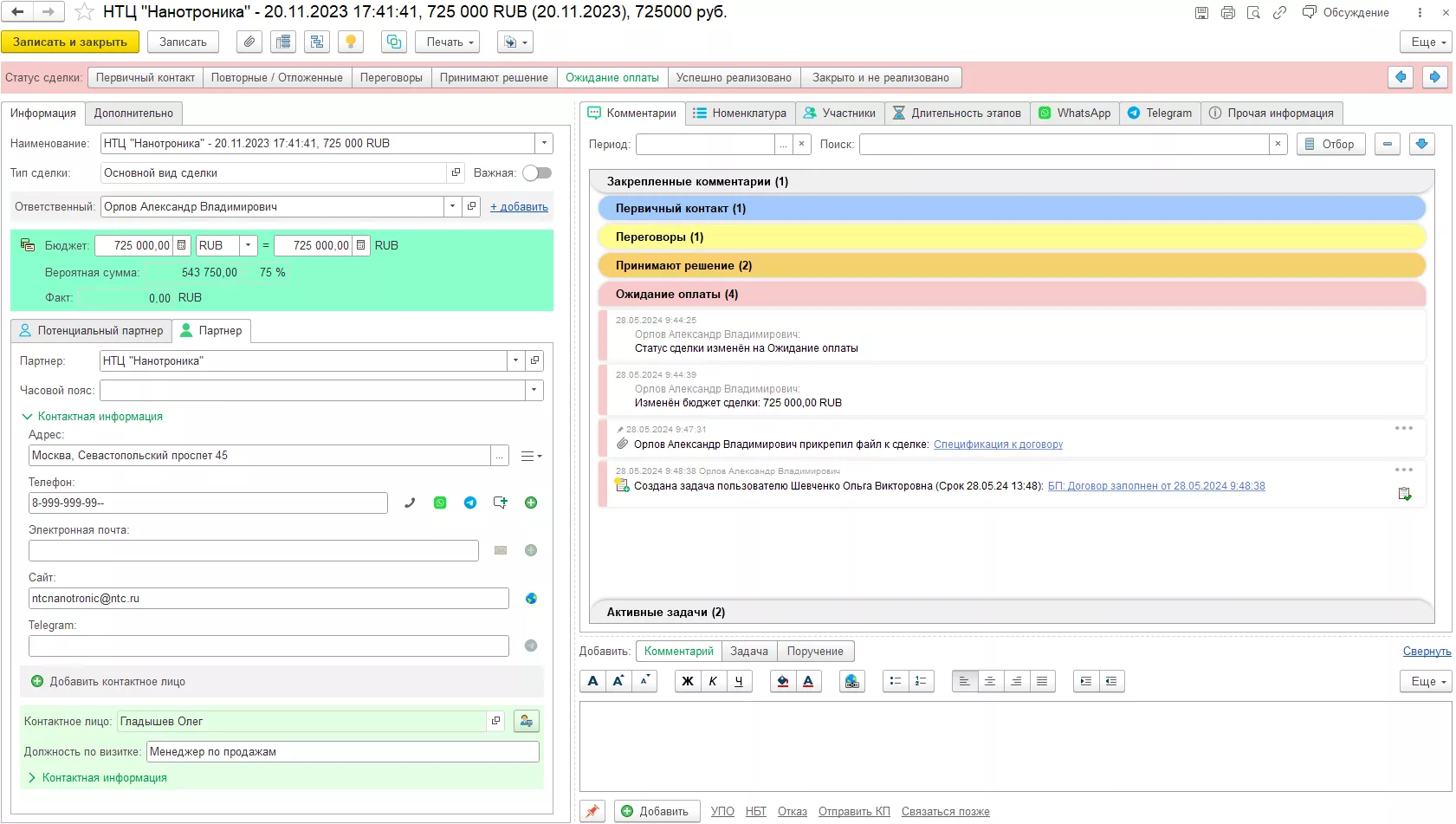
If your business operates in Saint Petersburg, choosing the right accounting and ERP platform is critical for compliance, efficiency, and growth. *1C:Enterprise* (commonly known as 1C) is the leading Russian business automation ecosystem — widely used by small businesses, medium enterprises and large corporations to handle accounting (бухгалтерия), payroll, inventory, trade and more. This article explains why 1C is a smart choice for Saint Petersburg companies and how to implement it smoothly with local partners.
Why 1C for Saint Petersburg businesses
— Designed for Russian legislation — built-in support for Russian tax and reporting standards saves time and reduces risk when submitting reports to ФНС, ПФР and Росстат.
— Local partner network — Saint Petersburg has a broad ecosystem of certified 1C integrators, consultants and training centers who understand local business practices and banks.
— Flexible scalability — suitable for a sole proprietorship or a multi-branch company with warehouses, stores and production sites across the region.
— Integration-friendly — connects to major Russian banks, online cash registers (ККТ), e-invoicing solutions and logistics systems used by northern businesses.
Key features that matter in Saint Petersburg
— Accounting and statutory reporting (1C:Бухгалтерия) — automated preparation and submission of reports to federal authorities.
— Payroll and HR (1C:Зарплата и Управление Персоналом) — payroll calculation according to Russian labor laws, benefits, and local accruals.
— Trade and warehouse management (1C:Управление Торговлей) — inventory control, sales automation and integration with online stores and marketplaces.
— Production and MRP (1C:ERP / 1C:Управление Производством) — planning, routing and cost accounting for manufacturers.
— Cloud vs on-premise — choose hosted (SaaS) or in-house installations depending on data sovereignty, integration needs and budget.
Implementation: practical steps
1. Needs assessment — define accounting, payroll, inventory and reporting workflows.
2. Select the right 1C configuration — standard packages or industry-specific configurations (retail, manufacturing, construction, services).
3. Choose deployment — cloud (1C:Fresh or partner cloud) for faster roll-out, or on-premise for complex integrations.
4. Data migration — move legacy accounting and client data; reconcile opening balances.
5. Customization & integration — connect to bank systems, KKT, CRM, e-commerce platforms and EDI partners.
6. Training and testing — practical sessions for accountants, HR and warehouse staff; run parallel reporting for a month if needed.
7. Go live & support — ongoing maintenance, updates for legislative changes and user support via a local partner.
Choosing a local Saint Petersburg 1C partner
When selecting an integrator, consider:
— Certification and experience — certified 1C specialists and proven projects in your industry.
— Local presence — on-site visits, quick response times and familiarity with Saint Petersburg business processes.
— Support packages — SLA levels, remote troubleshooting and regular updates.
— References and case studies — ask for examples of clients in your sector (retail, manufacturing, services, construction).
— Training offerings — in-person workshops or online courses for your staff.
Licensing & deployment options
— Subscription (cloud/SaaS) — predictable monthly costs, automatic updates and minimal IT maintenance.
— Perpetual license — one-time purchase, suitable for companies with in-house IT teams and strict data control needs.
— Hybrid — keep sensitive databases on-premise and host other modules in the cloud.
— Support contracts — choose between basic helpdesk and full-service packages covering legal updates, backups and customization.
Training, support and compliance
— Provide focused sessions for accountants on reporting workflows and using the built-in forms for ФНС and ПФР.
— Regular legislative updates are critical — 1C releases patches for tax changes and your partner should apply them promptly.
— Ensure backup routines and disaster-recovery plans to protect financial data and payroll history.
Common use cases in Saint Petersburg
— Retail chains automating multi-store inventory and online orders.
— Export-import companies handling customs documentation and currency accounting.
— Manufacturing firms integrating production planning with costing and procurement.
— Service companies and agencies automating contracts, billing and payroll.
Quick checklist before you start
— Define must-have functions (payroll, tax reports, online cash registers).
— Decide cloud vs on-premise based on security and integration needs.
— Budget for implementation, training and ongoing support (not just licenses).
— Choose a Saint Petersburg-certified 1C partner with local references.
Conclusion and next step
1C offers a comprehensive, locally compliant platform for finance, payroll and operations. For Saint Petersburg businesses, the combination of Russian-legislation support and a strong local partner network means faster implementation, reliable reporting and better operational control.
If you’d like, I can outline a tailored implementation plan for your company in Saint Petersburg — tell me your industry, company size and top three priorities (e.g., payroll accuracy, inventory control, statutory reporting), and I’ll draft the next steps.
