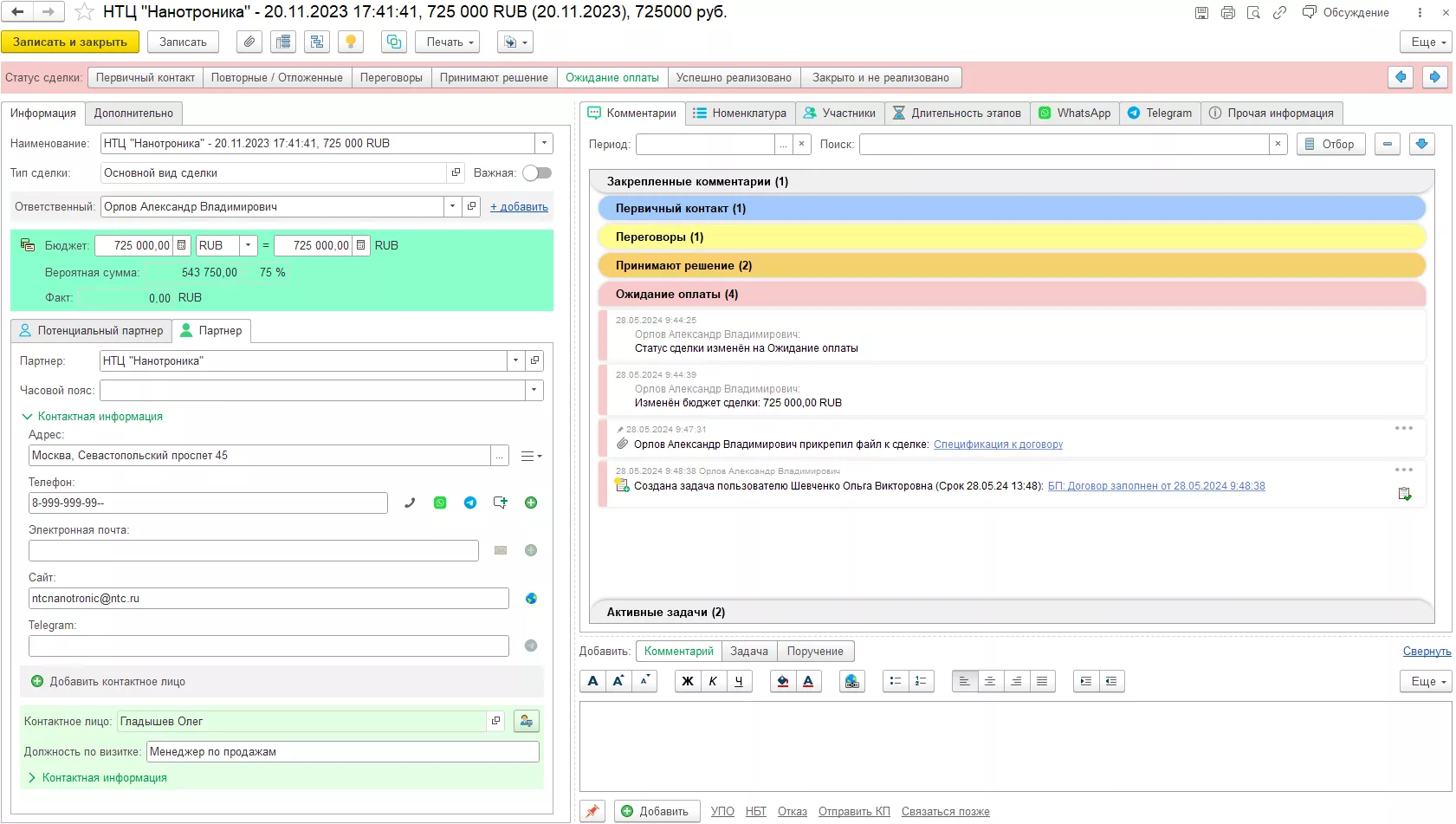
Overview
1C (1C:Предприятие) is the dominant accounting and ERP platform in Russia, widely used by companies of all sizes to manage accounting, payroll, trade, inventory, and tax reporting. In Saint Petersburg, businesses benefit from a strong ecosystem of certified partners, local consultants, and training centers that understand both 1C functionality and regional requirements.
What is 1C and which modules matter
— 1C:Enterprise (1C:Предприятие) — the platform/framework.
— 1C:Бухгалтерия (1C:Accounting) — core accounting, tax reports (ФНС, ПФР, ФСС).
— 1C:Зарплата и управление персоналом (Payroll & HR) — payroll, personnel records, labor reporting.
— 1C:Управление торговлей (Trade Management) — sales, purchasing, price lists.
— 1C:Документооборот (Document Management) — workflows, approvals, electronic archives.
— 1C:CRM — client relationship and sales pipeline management.
— 1C:EDI / Integration modules — electronic document interchange with partners and state bodies.
Why choose 1C for businesses in Saint Petersburg
— Familiarity: Most local accountants and auditors know 1C.
— Compliance: Built-in functionality for Russian tax and social reporting.
— Local support: Many certified partners, consultants and training centers are based in Saint Petersburg.
— Scalability: From single-user setups for small firms to multi-branch configurations for large enterprises.
— Integration: Good bank integrations and local EDI providers to connect with Petersburg-based trading partners and logistics companies.
Saint Petersburg–specific considerations
— Local tax inspectorates and regional social funds may have specific reporting practices; choose a partner familiar with St. Petersburg authorities.
— Integration with local banks and payroll services: confirm support for the banks you use in Saint Petersburg.
— Electronic document formats and EDI: check whether your trading partners or customers in the region require specific EDI standards.
— Language and localization: Russian-language interfaces and documentation are standard, but verify if training in English is needed for international teams.
Services offered by 1C partners in Saint Petersburg
— Implementation and configuration of chosen 1C modules.
— Customization and development of additional reports, forms, and business logic.
— Data migration from legacy systems or Excel.
— Integration with banking, CRM, e-invoicing, warehouses, and web stores.
— Cloud hosting (1C:Cloud, private cloud) and on-premise deployments.
— Technical support and maintenance (SLA agreements).
— Staff training and documentation in-house or at training centers.
— Audit and optimization of existing 1C installations.
How to choose a 1C partner
Look for the following criteria:
— *Official certification* from 1C and relevant module expertise.
— *Local references* in Saint Petersburg within your industry.
— Clear *project methodology*, timelines and deliverables.
— Transparent *pricing model* (license costs, implementation fees, support retainer).
— Support options and SLA (response times, remote vs onsite).
— Ability to provide *training* and knowledge transfer for your staff.
— Backup and disaster recovery approach, especially if hosting critical financial data.
Typical timeline and cost estimates (approximate)
— Small business (single company, basic accounting): *2–6 weeks*.
— Medium business (multiple departments, payroll, trade): *1–3 months*.
— Large/complex (multi-branch, integrations, heavy custom development): *3–9 months+*.
Cost components:
— Licenses (1C server, users, modules) — varies by edition and number of users.
— Implementation and configuration — from modest fees for simple setups to significant budgets for custom ERP.
— Custom development and integrations — depends on scope.
— Support/maintenance — monthly or annual contracts.
*Note:* Exact costs depend on your business size, required functionality, and level of customization. Get at least three quotes.
Common pitfalls and how to avoid them
— Skipping requirements analysis — leads to scope creep. *Do a thorough audit first.*
— Choosing the cheapest partner without checking references — can cost more later.
— Ignoring user training — adoption fails if staff aren’t comfortable with 1C. *Include training in the project plan.*
— Poor data migration planning — causes errors in opening balances and reporting. *Run pilot migrations and reconciliations.*
— No business continuity plan — ensure backup and disaster recovery for accounting data.
Migration checklist (quick)
— Audit current accounting processes and documents.
— List required 1C modules and integrations.
— Decide on cloud vs on-premise hosting.
— Prepare mapping for chart of accounts, counterparties, opening balances.
— Schedule pilot transfer, validation and reconciliation.
— Train users and update process documentation.
— Start live run with a support period for adjustments.
Final recommendations / next steps
1. Conduct a short internal audit of needs (modules, users, integrations).
2. Request proposals from 2–3 certified 1C partners in Saint Petersburg, including references.
3. Ask for a demo or pilot environment using your sample data.
4. Plan training and a post-go-live support window.
If you’d like, I can help draft a shortlist of technical requirements to send to potential 1C partners in Saint Petersburg or a template RFP to get comparable quotes.
